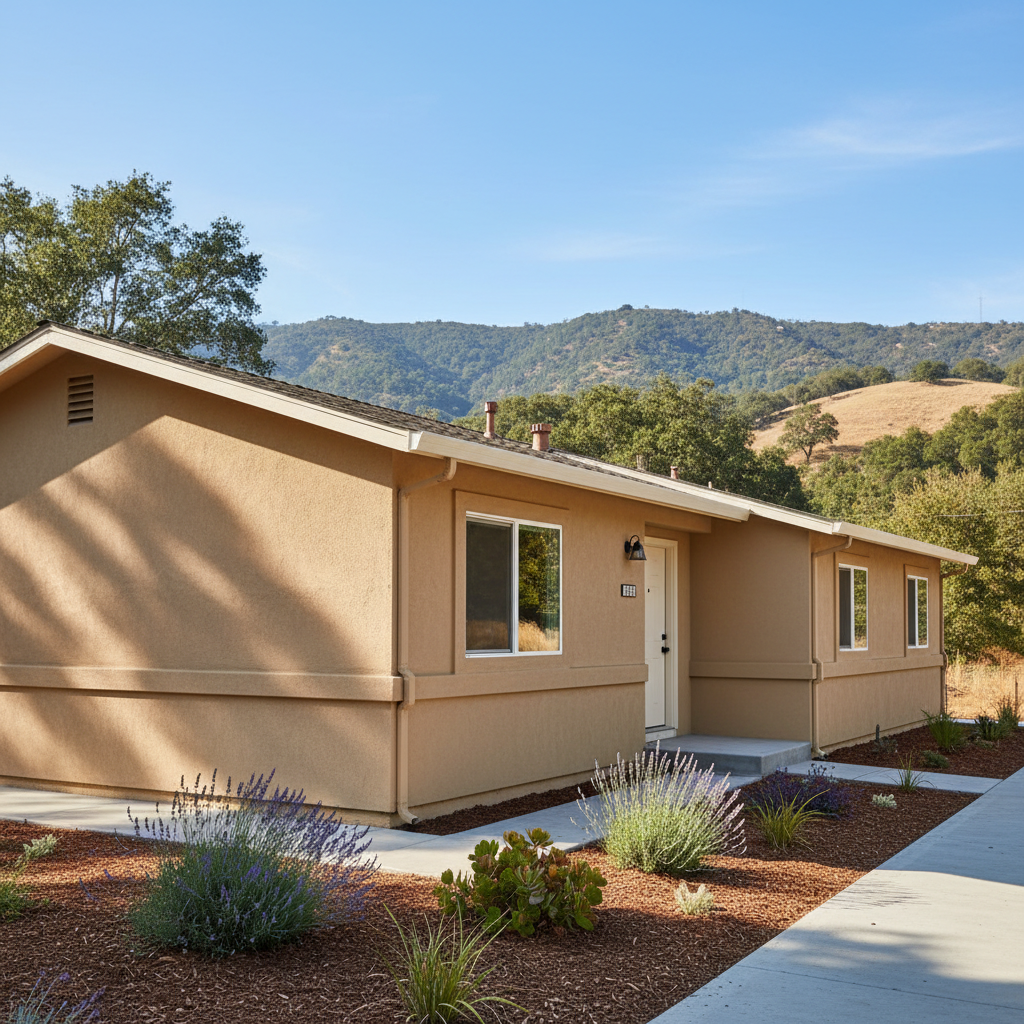
Alright, let's talk EIFS – that's Exterior Insulation and Finish Systems. Maybe you're eyeing it because you want better insulation, or a fresh look, or perhaps your old siding is just totally shot. But what's it actually going to cost you to get EIFS installed on your Scotts Valley home? That's the big question, and I'm here to give you some straight answers, not just a bunch of 'it depends' fluff.
What Even Is EIFS, and Why Does it Cost What it Does?
First off, EIFS isn't your grandma's stucco. It's actually a multi-layered system that includes an insulation board, a base coat with reinforcing mesh, and then a finish coat that looks a lot like traditional stucco. The really important part here is the insulation. That's where you get all those energy efficiency benefits. Because it's a whole system, and not just one material, the installation process is more involved than just slapping on some paint or even traditional stucco.
So, what drives the price? Think about it this way:
- Material Costs: You've got the insulation boards themselves, the specialized base coats, mesh, primers, and the finish coat. These aren't cheap, and quality really matters. You definitely don't want to skimp here.
- Labor: This is a skilled trade, no doubt about it. Applying EIFS correctly, especially getting those layers just right and making sure the insulation is properly sealed, takes experienced hands. It's not a DIY job, and a good crew costs money.
- Project Complexity: Is your house a simple box or does it have a lot of architectural details, bump-outs, curves, or multiple stories? More corners, more windows, more doors, and higher walls mean more intricate work and more time.
- Condition of Existing Walls: If we have to tear off old siding, repair sheathing, or deal with mold or water damage underneath, that's going to add to the cost. We can't put a new system over a bad foundation, right?
- Accessibility: Can we easily get scaffolding up? Is your yard clear? Steep hillsides, like some properties up in the Bean Creek area, can make access a real pain and bump up labor costs for safety and logistics.
Typical EIFS Pricing Ranges in Scotts Valley
Look, I'm not going to give you a single number because every house is different. But I can give you a realistic range based on what I've seen around here. For a full EIFS installation on an average single-family home in Scotts Valley, you're generally looking at $10 to $20 per square foot of wall surface area. That's a pretty wide range, I know, but let me break down what pushes it to the higher or lower end.
- Lower End ($10-$14/sq ft): This would be for a fairly straightforward, single-story home with minimal architectural features, good access, and no major prep work needed. Think a simple ranch-style house.
- Mid-Range ($14-$17/sq ft): Most homes fall in here. Two stories, some window trim details, maybe a few bump-outs, and standard prep.
- Higher End ($17-$20+/sq ft): This is for complex designs, multi-story homes with difficult access, lots of intricate details, or projects requiring significant demolition and substrate repair. If we're talking about a custom home with lots of angles and curves, you can expect to be on the higher side.
So, for a 2,000 square foot house with, say, 1,500 square feet of exterior wall surface, you could be looking at anywhere from $15,000 to $30,000. That's a big chunk of change, but remember, you're getting a high-performance system.
What Should Be Included in Your Quote?
When you get a quote from Progressive Stucco Solutions, or anyone else for that matter, make sure it's detailed. You don't want surprises. Here's what a good quote should spell out:
- Surface Preparation: What needs to be done before EIFS goes on? Is it just cleaning, or does old siding need to be removed? Are repairs included?
- Insulation Board: What type and thickness (e.g., 1-inch EPS foam)? Thicker insulation costs more but gives better R-value.
- Base Coat & Mesh: Details on the specific products and the number of layers.
- Finish Coat: The type of finish (e.g., acrylic, elastomeric), texture (fine, medium, coarse), and color.
- Flashing & Sealants: These are crucial for preventing water intrusion around windows, doors, and rooflines. This is non-negotiable.
- Scaffolding/Access Equipment: Who's providing it, and is the cost included?
- Waste Removal: What happens to the old material and construction debris?
- Warranty: What's covered, and for how long?
- Permits: Who's responsible for pulling them? (Usually the contractor, but make sure it's clear).
How to Avoid Overpaying for EIFS
You want a good job at a fair price. Here's how to make sure you're not getting fleeced:
- Get Multiple Bids: Three is a good number. Don't just go with the cheapest. Compare what each contractor is offering.
- Check References & Licenses: Always, always, always. Make sure they're licensed in California and have good reviews. Ask for local references – people you can actually call.
- Understand the Scope: Read the quote carefully. If one bid is significantly lower, find out why. Are they using cheaper materials? Cutting corners on prep? Missing something important like flashing?
- Don't Rush: A good EIFS job takes time to plan and execute. Don't let anyone pressure you into a quick decision.
- Ask About Experience with EIFS: This isn't traditional stucco. You want a contractor who knows the ins and outs of EIFS systems specifically.
EIFS is a solid investment for your home, especially with our coastal weather and the need for good insulation. Just make sure you're going into it with your eyes wide open about the costs and what you're getting for your money.